Tutu News (TutuNews) @tutunews
After Apple brought “massive unified memory” to local AI, Macs can finally be discussed on the same performance chart as consumer graphics cards.
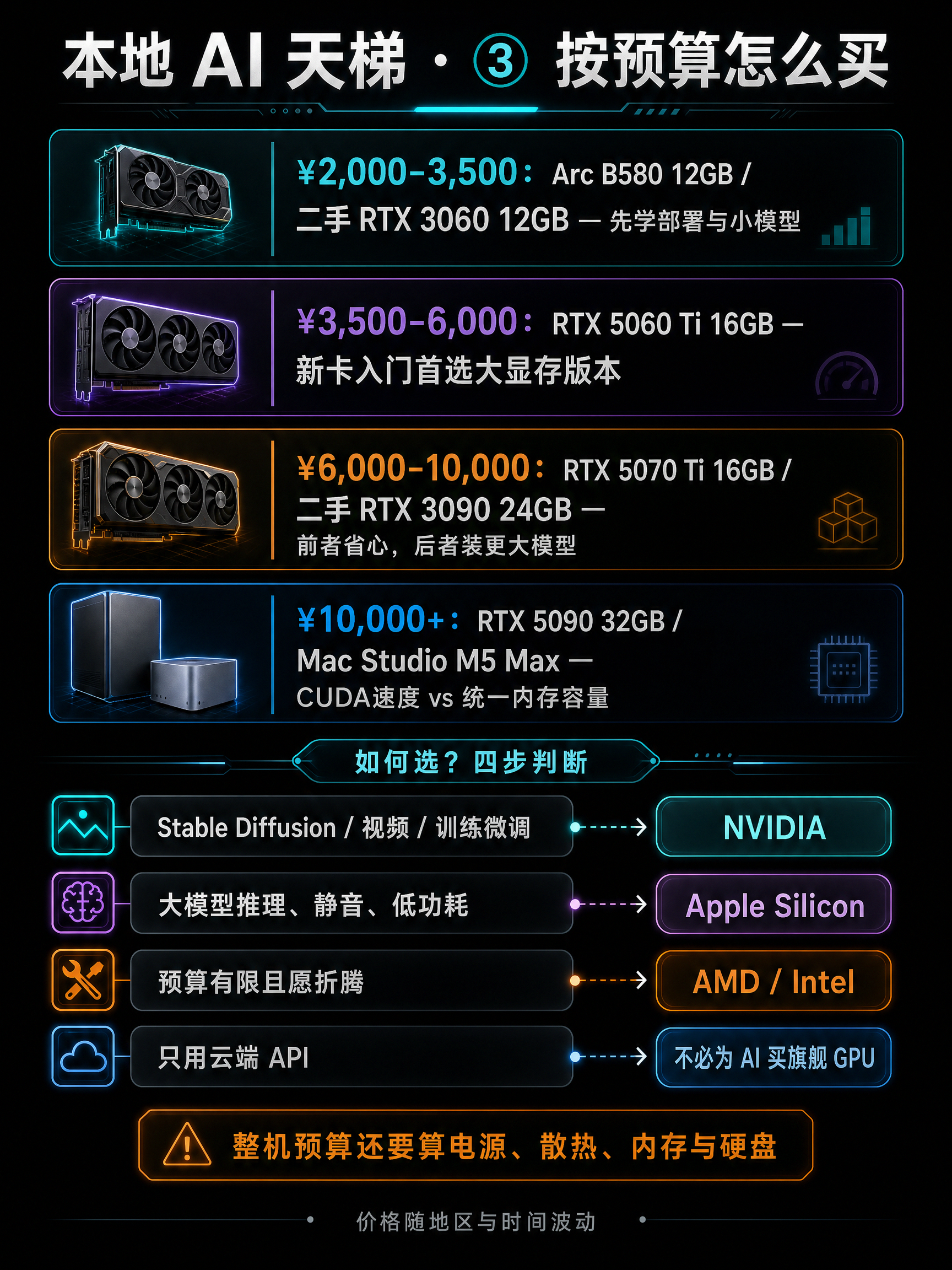
This ranking isn’t just about benchmark scores. It answers a more practical question: if you’re an everyday user getting into local AI, should you buy a Mac or a graphics card from NVIDIA, AMD, or Intel?
First, Apple:
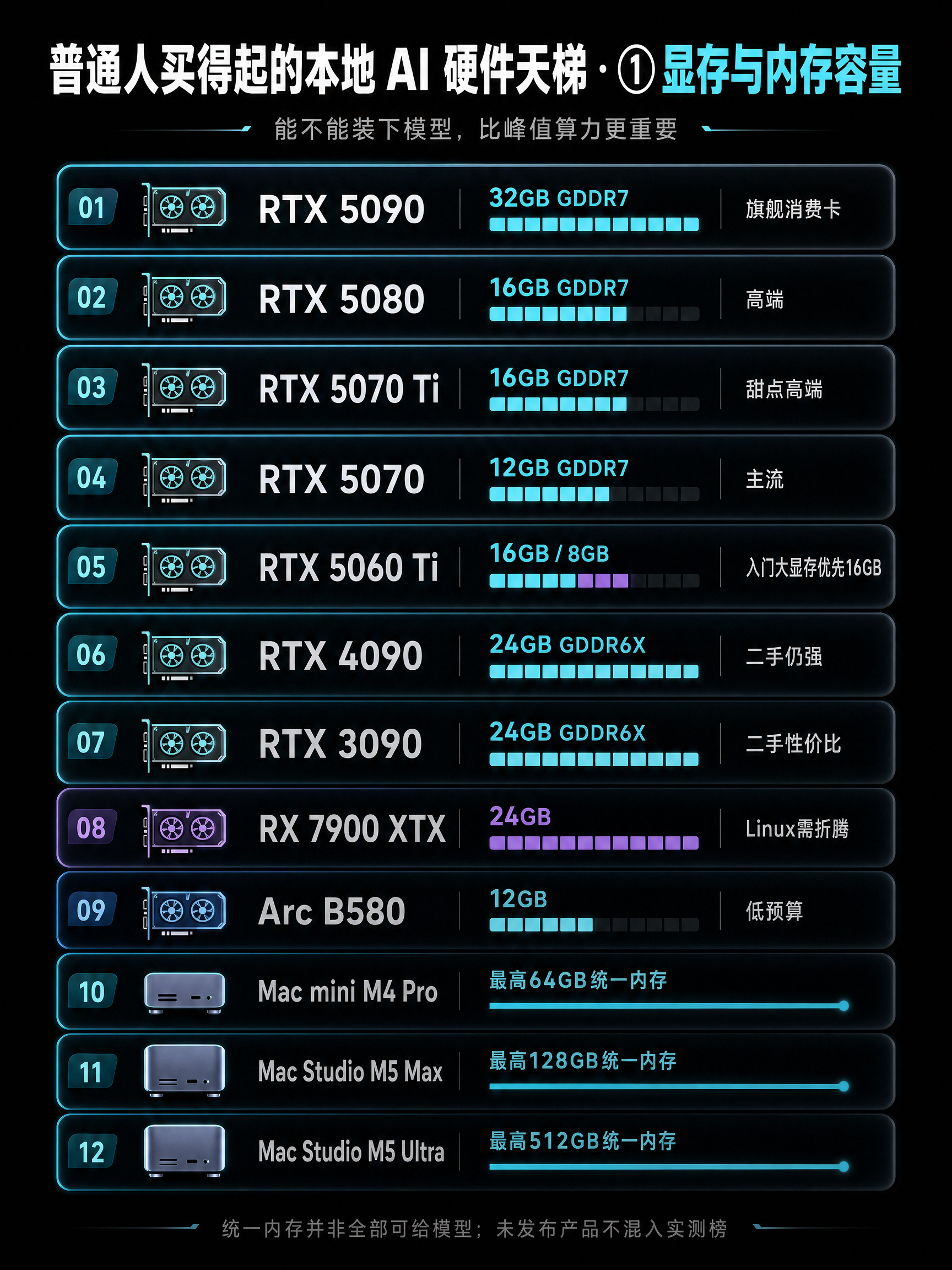
• Mac mini M4 Pro: up to 64GB of unified memory; quiet and power-efficient, making it a good entry point for running large language models locally
• Mac Studio M5 Max: up to 128GB, balancing creative work with larger models
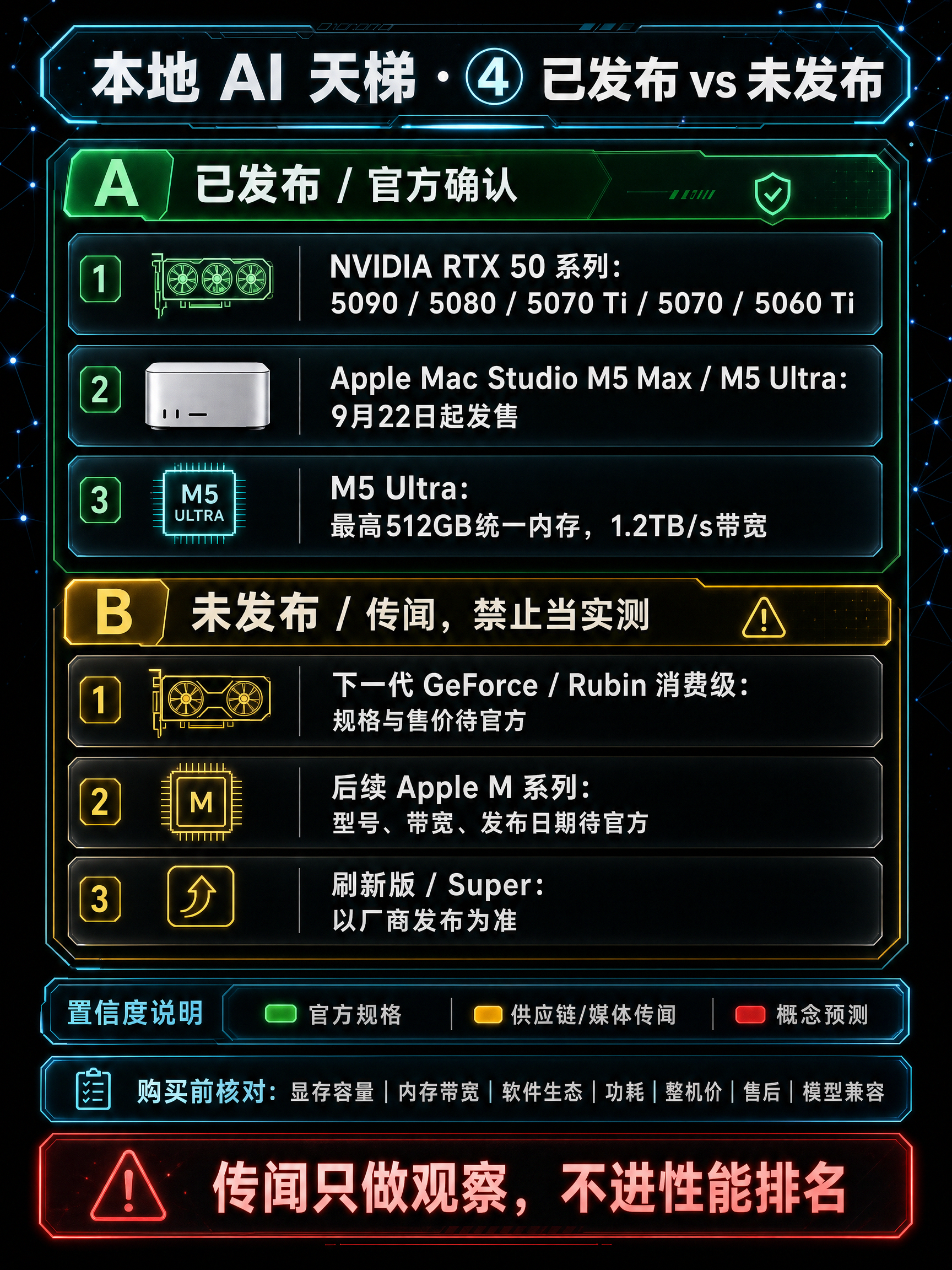
• Mac Studio M5 Ultra: up to 512GB and 1.2TB/s memory bandwidth; its key advantage is being able to “fit extremely large models”
Now for the graphics card route:
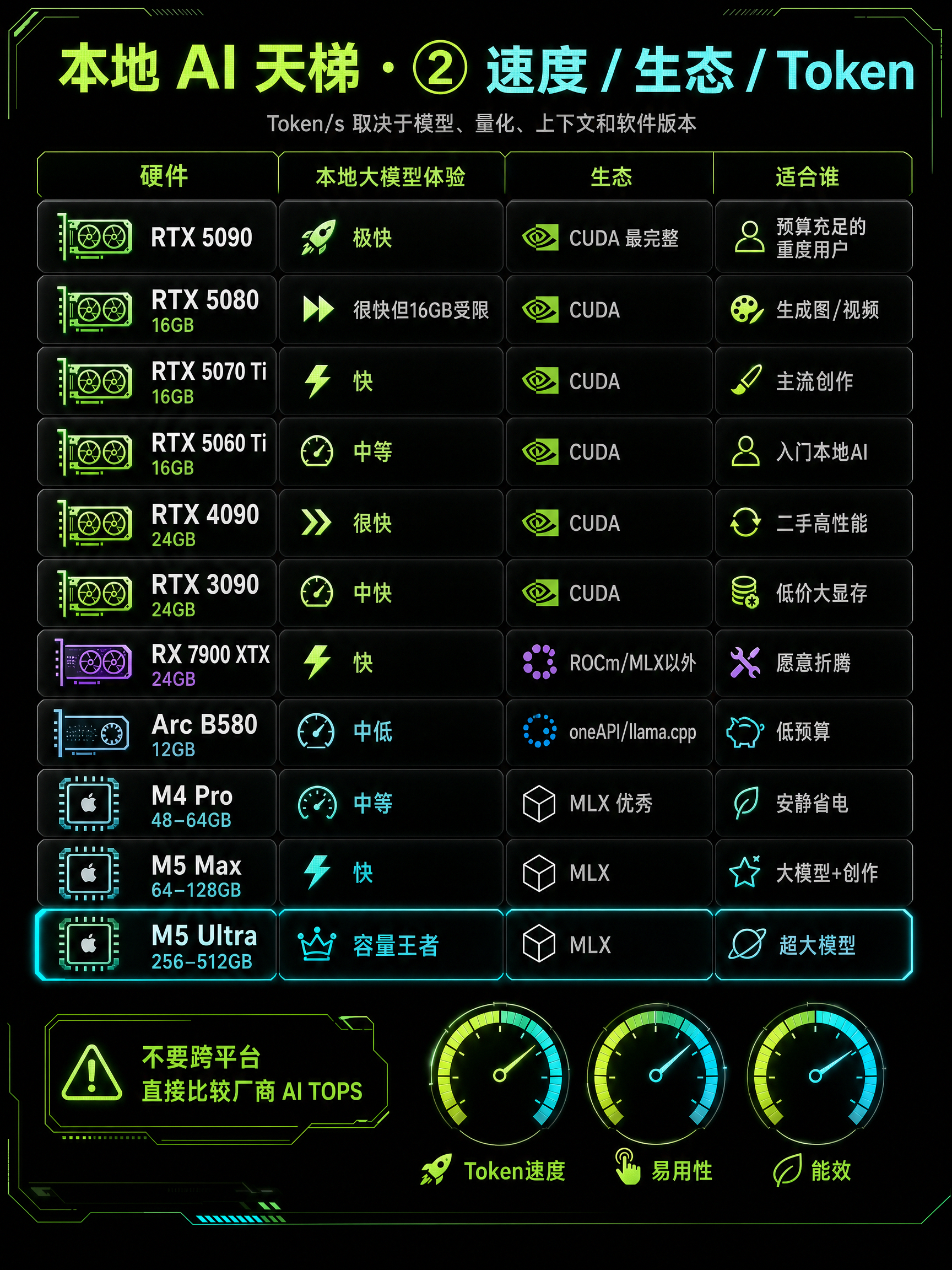
• NVIDIA: stronger in token speed, Stable Diffusion, video generation, training, and fine-tuning, with the most mature CUDA ecosystem
• RTX 5060 Ti 16GB: the entry-level new card for everyday users
• RTX 5070 Ti 16GB: the mainstream performance tier
• RTX 5090 32GB: the consumer speed flagship
• Used RTX 3090 24GB: the low-cost, high-VRAM option
• AMD / Intel: budget-friendly, but check software compatibility first
The real choice isn’t about “who has the highest benchmark score.” It’s about whether the model fits, Token/s, ecosystem, power consumption, noise, and total system price. AI TOPS from different platforms can’t be compared directly, and Token/s also varies with the model, quantization, context, and software version.
From here on, every time Apple releases a new chip, its official specs can be added to this ranking: look at unified memory and bandwidth first, then real-world model speed. Unreleased Apple and NVIDIA products belong only in the watchlist, not passed off as tested hardware.
Source basis: official Apple and NVIDIA pages, as of 2026-09-03.
#Space Technology #AppleSilicon #MacStudio #Macmini #本地AI #GPU #NVIDIA #Large Language Models